
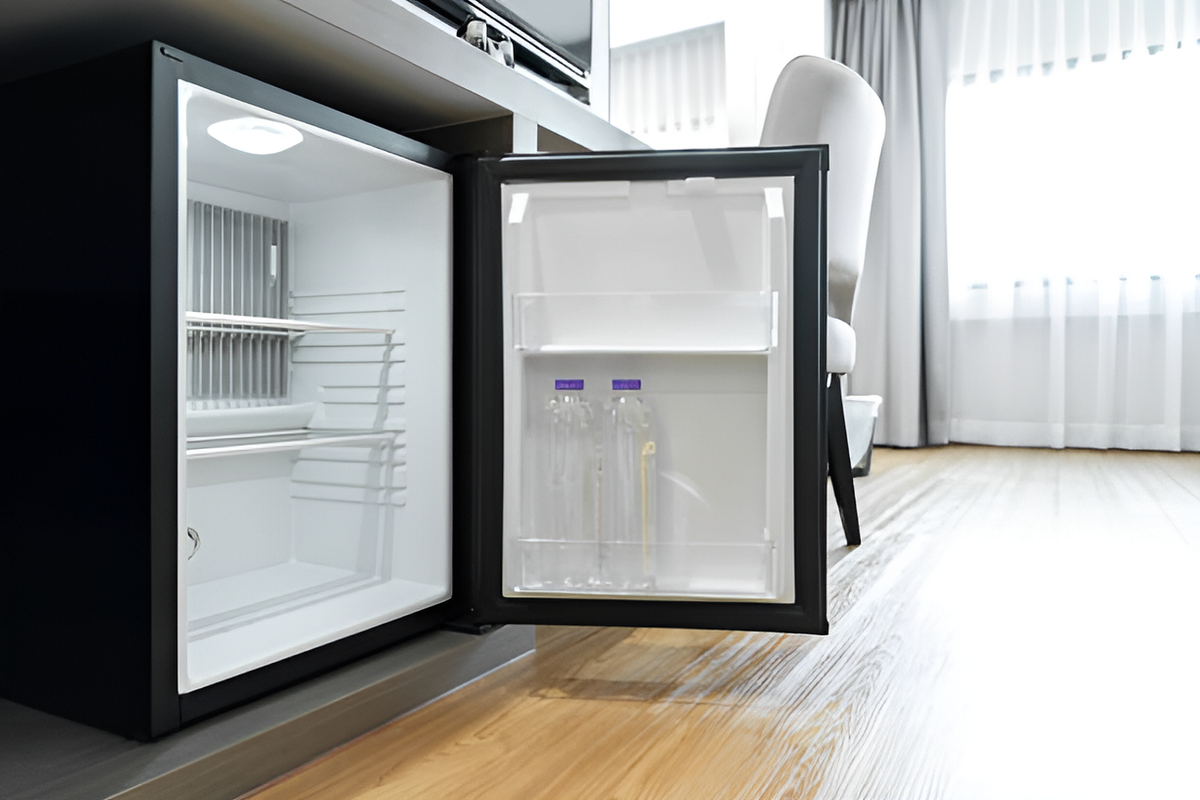
- Mini fridges use relatively little electricity: Small models typically consume 55–80 kWh/year, making them inexpensive to run—often under $2 per month.
- Energy use depends on size, efficiency, and usage habits: Factors like door openings, room temperature, and how full the fridge is can affect electricity consumption.
- Mini fridges are generally more efficient per cubic foot than full-size refrigerators: They’re ideal for single users, small apartments, offices, or dorm rooms.
- Full-size fridges use significantly more power: Standard models consume 400–600 kWh/year, costing much more to operate, but offer more storage and cooling capacity.
- Energy-saving features matter: ENERGY STAR certification, adjustable thermostats, LED lighting, and inverter compressors can reduce power usage.
- Proper placement and maintenance improve efficiency: Keeping the fridge in a cool spot, avoiding hot food, cleaning coils, and closing doors properly helps lower energy costs.
If you’ve ever debated whether to get a mini fridge for your dorm, office, or small apartment, one big concern probably popped into your head: Do mini fridges use a lot of electricity? The answer isn’t a simple yes or no. It depends on a few key factors including size, model, and usage habits. Let’s break it down and see how these little appliances stack up against their full-size counterparts.
How Much Electricity Does a Mini Fridge Actually Use?
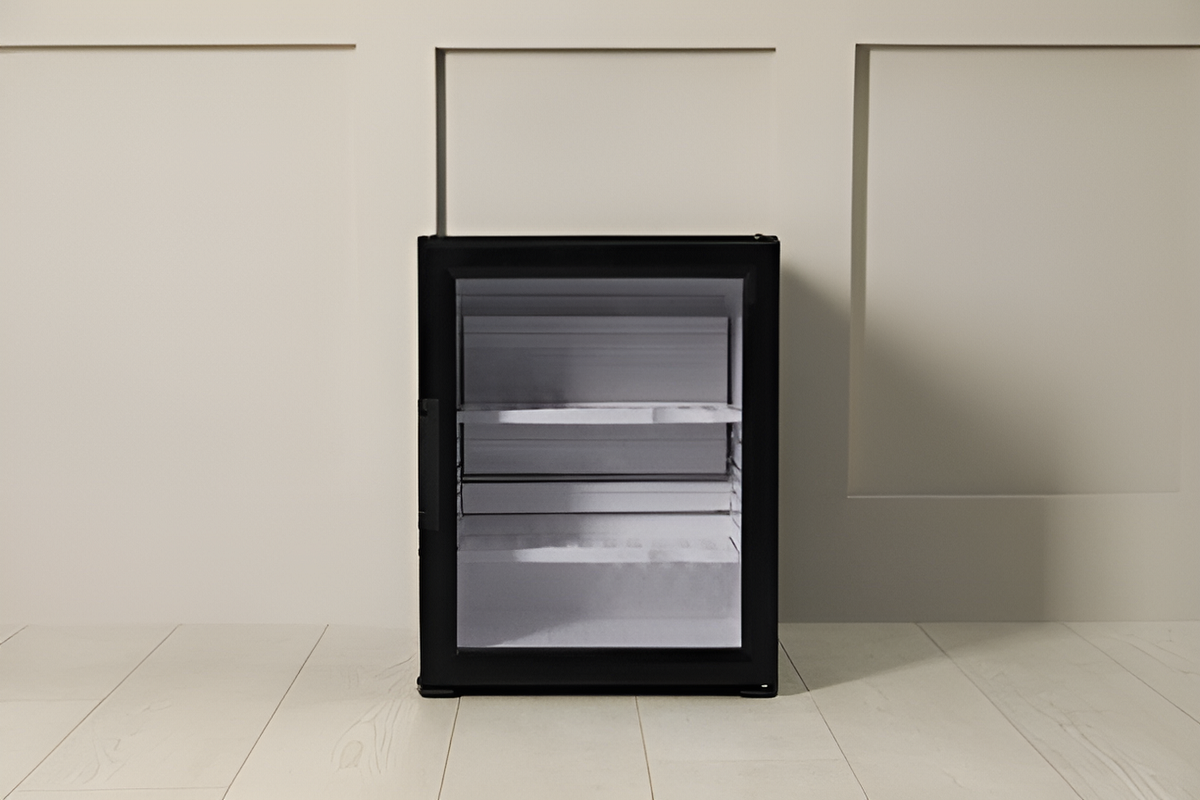
Mini fridges are designed to be compact and convenient, but “compact” doesn’t always mean “low energy.” On average, mini fridges consume between 55 and 100 kilowatt-hours (kWh) per year. Here’s a closer look:
- Small mini fridges (1.7–3.5 cubic feet): About 55–80 kWh/year
- Medium mini fridges (3.5–4.5 cubic feet): Around 80–100 kWh/year
- Large mini fridges (4.5+ cubic feet): Can reach 120 kWh/year
To put it in perspective, the average U.S. household pays about 15 cents per kWh. So running a small mini fridge for a year may only cost $8–$12, while a larger one might cost $18 or more.
What Factors Affect Mini Fridge Electricity Use?
Several factors influence how much electricity your mini fridge consumes:
- Size: Bigger fridges naturally use more energy because they need to cool more space.
- Energy efficiency rating: Look for ENERGY STAR-certified models—they’re designed to use less power.
- Frequency of door openings: Every time you open the fridge, cold air escapes and the compressor works harder.
- Ambient temperature: A fridge in a hot room or near a window will use more electricity to maintain a cool temperature.
- Content level: A full fridge maintains temperature better than an empty one, meaning the compressor cycles less frequently.
How Do Mini Fridges Compare to Full-Size Refrigerators?
When comparing mini fridges to full-size models, there’s no doubt that full-size refrigerators consume more electricity overall because of their larger capacity. If you’re wondering how much power a refrigerator uses, standard kitchen fridges typically run between 400 and 600 kWh per year. In contrast, mini fridges use a fraction of that energy, making them more budget- and energy-friendly for smaller spaces.
Here’s a side-by-side look:
| Appliance Type | Average kWh/year | Estimated Cost/year | Notes |
| Small mini fridge | 55–80 | $8–$12 | Compact, ideal for one person or small spaces |
| Medium mini fridge | 80–100 | $12–$15 | Can store more food and drinks |
| Large mini fridge | 100–120 | $15–$18 | Approaches small full-size fridge energy use |
| Full-size fridge | 400–600 | $60–$90 | Standard kitchen fridge, higher capacity and power usage |
From this, it’s clear that mini fridges are far less expensive to run, but they come with trade-offs in storage and cooling efficiency.
Are Mini Fridges Energy Efficient?
Yes, mini fridges are generally more energy-efficient than full-size fridges when considering usage per cubic foot. They’re designed for smaller loads and often have more modern, energy-saving components. If efficiency is your goal, here’s what you should look for:
- ENERGY STAR Certification: These models meet strict efficiency standards.
- Thermostat control: Being able to adjust the temperature can save energy.
- LED lighting: Uses less power than traditional bulbs.
- Compressor type: Some mini fridges use inverter compressors, which are more efficient than standard compressors.
Can Mini Fridges Run 24/7 Without Driving Up Electricity Bills?
A common concern is whether leaving a mini fridge plugged in all the time will spike your energy bill. The short answer: not significantly, especially for smaller models.
- Small models: Around $1 per month in electricity
- Medium models: $1–$1.50 per month
- Large models: $1.50–$2 per month
These costs are minimal compared to other household appliances like ovens, air conditioners, or even full-size refrigerators.
Tips to Reduce Electricity Usage for Your Mini Fridge
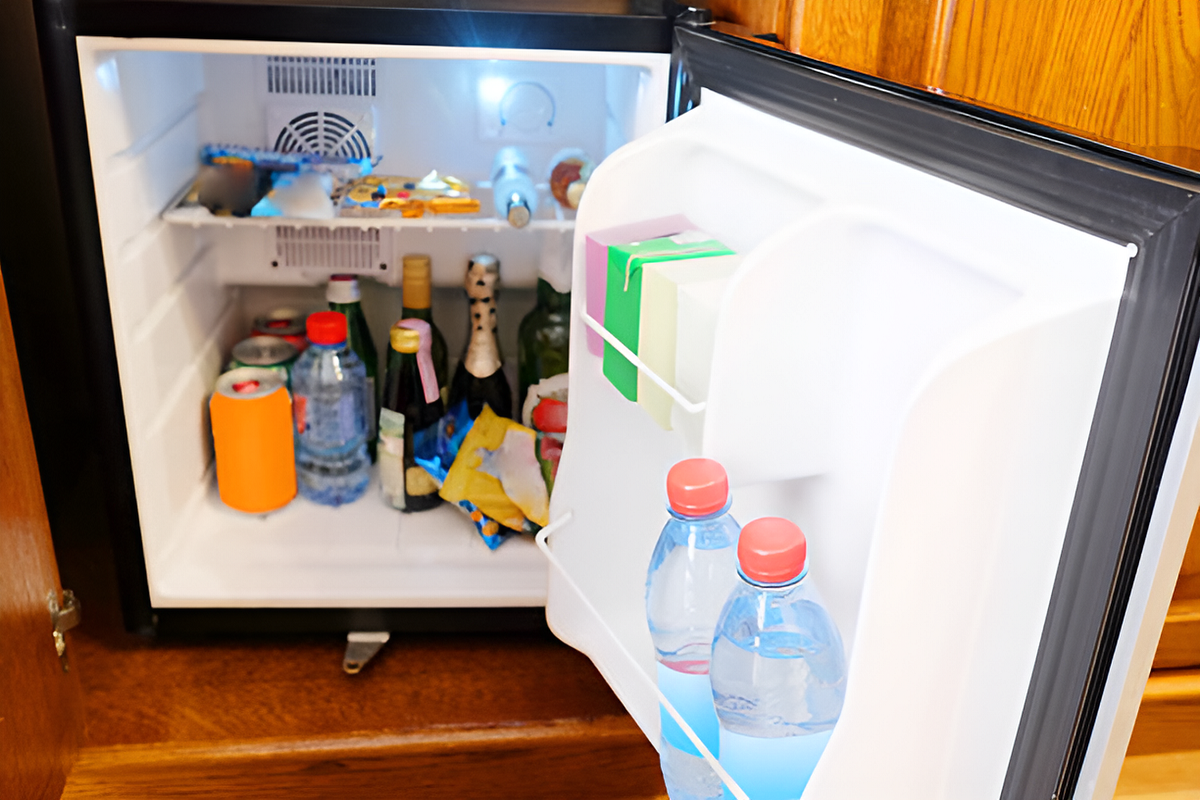
If you want to get the most energy efficiency out of your mini fridge, try these simple tips:
- Keep it full, but not overcrowded: A moderately full fridge cools more efficiently.
- Avoid hot food inside: Let leftovers cool before storing to prevent the compressor from working extra hard.
- Place in a cool, ventilated area: Avoid direct sunlight or heat sources.
- Close the door properly: Minimize door openings and make sure the seal is tight.
- Clean the coils: Dusty coils make the fridge work harder.
- Set an appropriate temperature: 37–40°F for the fridge, 0°F for the freezer is ideal.
Common Myths About Mini Fridge Electricity Use
There are plenty of misconceptions about mini fridges. Here’s a reality check:
- Myth 1: Mini fridges always use less power than full-size fridges.
Reality: While they generally consume less overall, a large mini fridge can use as much electricity as a small full-size fridge. - Myth 2: Keeping a mini fridge in a bedroom is wasteful.
Reality: Small models are efficient enough that running one in a bedroom barely impacts your energy bill. - Myth 3: Older mini fridges are fine to keep using.
Reality: Older models are often much less efficient. Upgrading can save money in the long run.
Are There Different Types of Mini Fridges?
Yes, not all mini fridges are the same. Different designs impact electricity use:
- Dorm-style fridges: Small, basic, usually very energy-efficient.
- Compact fridge-freezers: Include a small freezer compartment; slightly higher energy use.
- Beverage fridges: Often only cool drinks; usually among the most efficient.
- Wine fridges: Specialized cooling; can be efficient but may vary depending on size.
Choosing the right type for your needs ensures you don’t pay more than necessary in electricity.
How Do Mini Fridges Affect Your Carbon Footprint?
Electricity consumption directly affects your carbon footprint. Since mini fridges use less electricity than full-size models, they generally have a smaller impact on the environment. Choosing an ENERGY STAR model and practicing smart usage habits can further reduce emissions.
When Might a Full-Size Fridge Be More Practical?
While mini fridges are convenient, there are situations where a full-size refrigerator makes sense:
- Family households: More storage is essential.
- Meal prepping: Large quantities of food need a bigger fridge.
- Frequent entertaining: You’ll need space for drinks, leftovers, and perishables.
Even though the energy use is higher, the trade-off is practicality. For single users, students, or small office setups, mini fridges are usually sufficient.
How to Estimate Your Mini Fridge Electricity Cost
If you want a quick estimate of your mini fridge’s electricity usage, here’s a simple formula:
- Check the fridge’s wattage (usually on the back or in the manual).
- Multiply by hours per day it runs. Most mini fridges run 8–12 hours/day, cycling on and off.
- Divide by 1,000 to convert watts to kilowatts.
- Multiply by your electricity rate (e.g., $0.15 per kWh).
For example:
- A 100-watt fridge running 10 hours/day:
100 watts × 10 hours = 1,000 watt-hours → 1 kWh/day
1 kWh × $0.15 = $0.15/day → ~$4.50/month
This quick calculation helps you budget and compare different models.
Are There Smart Mini Fridges?
Yes, smart mini fridges are becoming popular. They include features like:
- Remote temperature control via app
- Energy monitoring
- Automatic power-saving modes
While they might cost more upfront, smart mini fridges can optimize energy use and help reduce electricity bills.
Should You Upgrade Your Mini Fridge?
If your fridge is more than 10 years old, it’s worth considering an upgrade. Newer models use less electricity, often come with ENERGY STAR certification, and offer better temperature control. Even a slightly higher upfront cost can pay off in energy savings over time.
So, Do Mini Fridges Use a Lot of Electricity?
In short, mini fridges do use electricity, but not nearly as much as full-size refrigerators. For most single users or small spaces, the cost of running a mini fridge is minimal, often less than $2 per month for smaller models. Choosing an energy-efficient model, keeping it in the right environment, and using smart habits can make your mini fridge both convenient and cost-effective.
Mini fridges are a practical choice if you need compact refrigeration, but it’s important to pick the right size and type for your needs. They offer a balance of convenience, efficiency, and affordability, making them perfect for dorm rooms, offices, or tiny apartments without spiking your electricity bills.